
Description
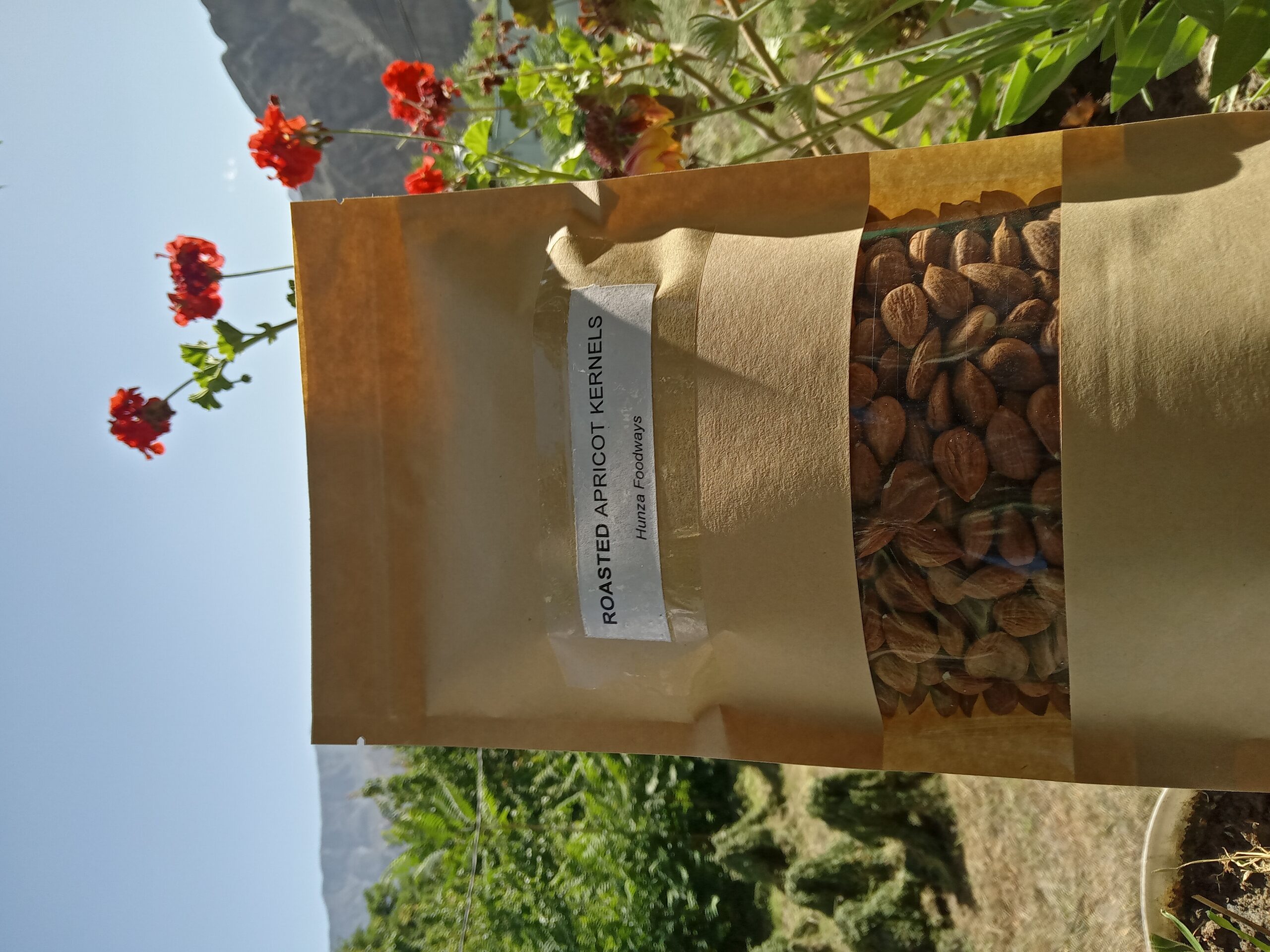
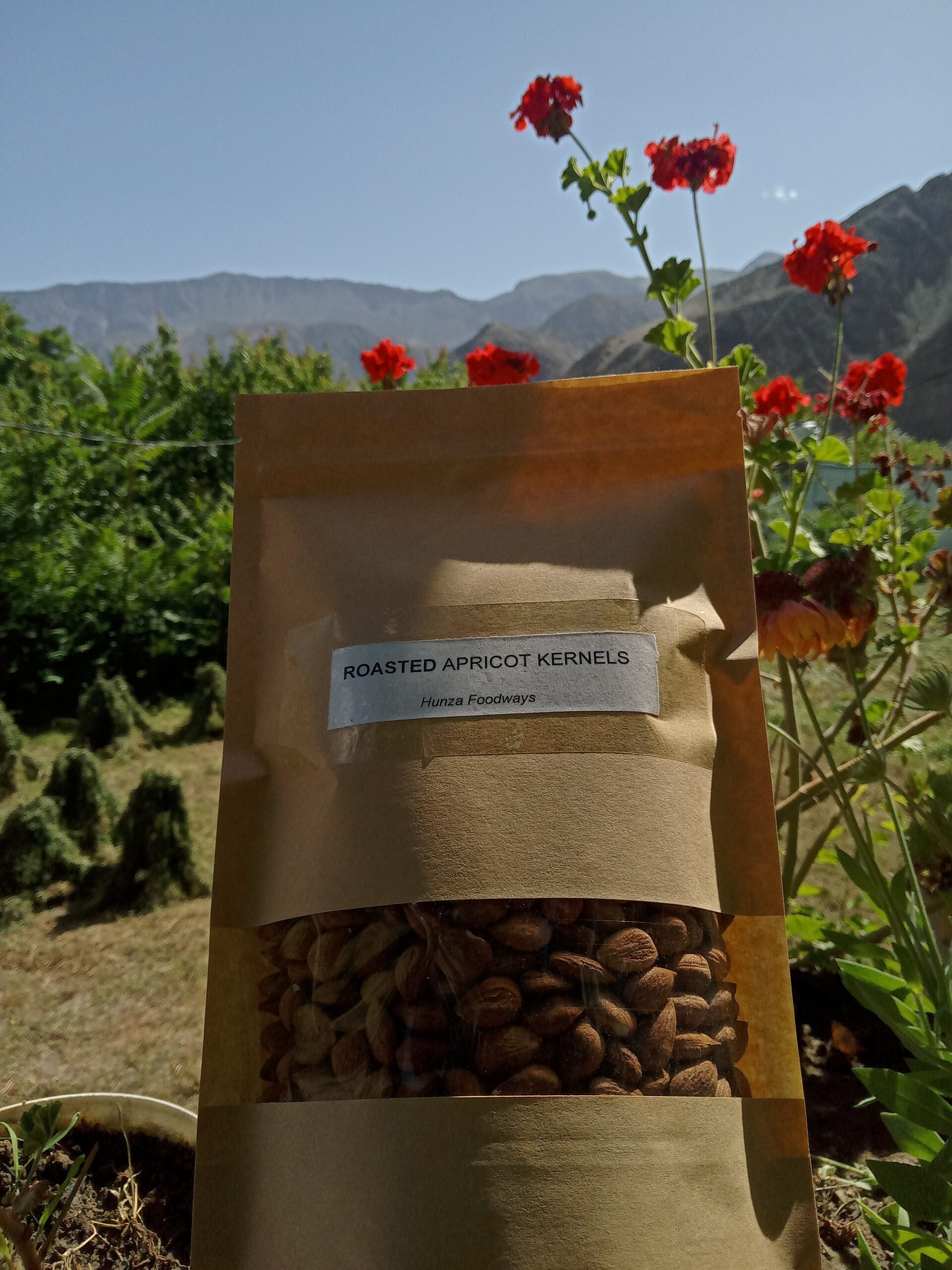
Khubani Geree has been a part of Gilgit-Baltistan’s food culture for as long as the apricot trees have grown here, which is a very long time. What most people don’t realise is that not all apricot kernels are the same. The sweet variety, grown wild across the Hunza Valley, carries almost no amygdalin, which makes it genuinely safe to eat. Roasting them takes that a step further: it brings out a warm, nutty depth that makes these roasted sweet apricot kernels something you actually want to snack on, not just something you take for a health reason.
These kernels come from wild-grown apricot trees in Hunza Valley, hand-harvested during the season and roasted without any additives. No preservatives, no flavouring, nothing added. Just the kernel, roasted until it develops that slightly toasty, almond-adjacent taste that makes it easy to eat by the handful.
Roasted Apricot Kernels as a Snack
The most honest way to describe these is: a nut that most people have never tried. In texture and taste, they sit somewhere between a roasted almond and a sunflower seed, with a mild bitterness that disappears quickly. They work as a standalone snack, mixed into trail mix, crushed over oatmeal or yoghurt, or added to baked goods for a subtle nuttiness. People in Hunza have eaten them this way for generations, usually alongside dried apricots or mulberries.
Roasted apricot kernels are also a solid source of:
- Healthy fats, including omega-3 and omega-6 fatty acids
- Protein, roughly 20g per 100g serving
- Vitamin E, which supports skin health
- Iron, potassium, and calcium
- Fibre, which supports digestion
Research published in peer-reviewed journals highlights that apricot kernels contain polyphenolic compounds including flavonoids and carotenoids, alongside antioxidants that help the body manage oxidative stress. The omega fatty acid content has been associated with heart and brain health in multiple studies.
Why the Roasted Form Matters
Raw sweet kernels are also available on this site, and they serve a slightly different purpose. The raw version retains maximum nutrient density and is often preferred by people who want to use the kernel for oil extraction or skin exfoliation. The roasted apricot seed, on the other hand, is for eating. Roasting improves digestibility and makes the flavour more approachable, especially for people who are new to apricot kernels.
This is also worth saying clearly: these are sweet kernels, not bitter ones. Bitter apricot kernels contain significantly higher levels of amygdalin and carry real safety concerns if consumed in quantity. The sweet variety contains very little of it, and research from Inonu University, Turkey has confirmed that sweet apricot kernels are safe for regular consumption. If you have seen warnings about apricot kernels online, those almost always refer to the bitter kind.
Available in 200g and 500g packs.
Wild-grown in Hunza Valley, roasted without additives, and packed in Rahimabad, Gilgit-Baltistan.
If you are building out a nut rotation or just want something different to snack on, these are worth trying. They pair well with other products from the Nuts category: walnut kernels, (white) walnut kernels (brown), almond kernels, chilgoza (pine nuts), and the classic mix dry fruit trail mix from Hunza.
All health content on HunzaFoodways.com is for general information only and should not replace advice from your doctor or healthcare professional. No product is lab-tested and certified organic unless stated. Read the full medical disclaimer.

Reviews
There are no reviews yet.