
Description
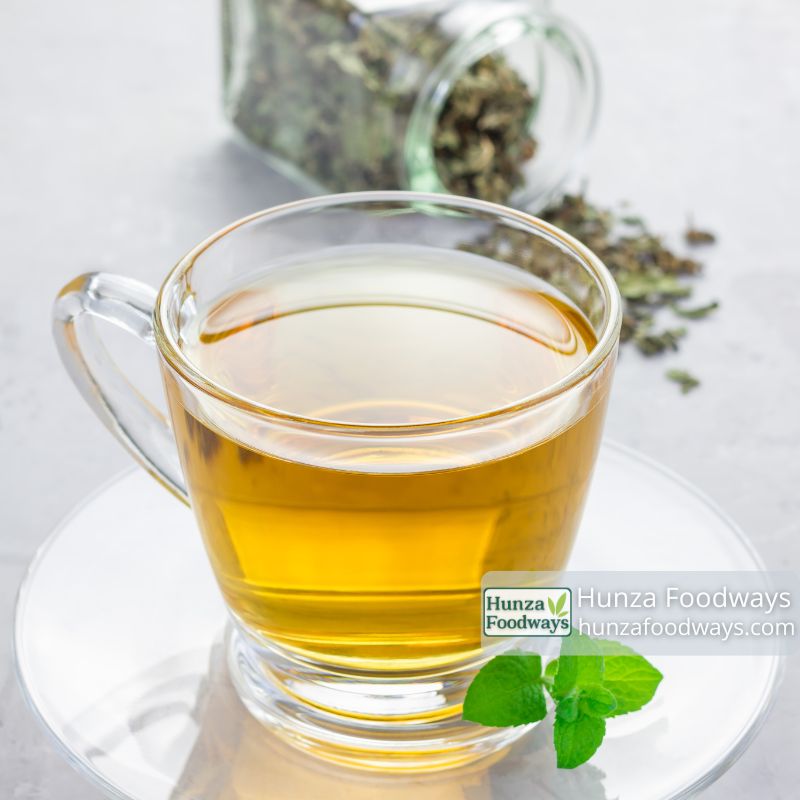
Podina chai holds a quiet kind of authority in Pakistani kitchens. Long before it appeared on wellness blogs or café menus, families across Gilgit-Baltistan were reaching for a handful of dried mint leaves to settle an uneasy stomach, ease a throbbing head, or simply close out a long evening with something warm and cooling at the same time. That same plant, now wild-harvested from the mountain slopes of Hunza Valley, is what goes into every pouch of our Peppermint Tea.
What Is Peppermint Tea?
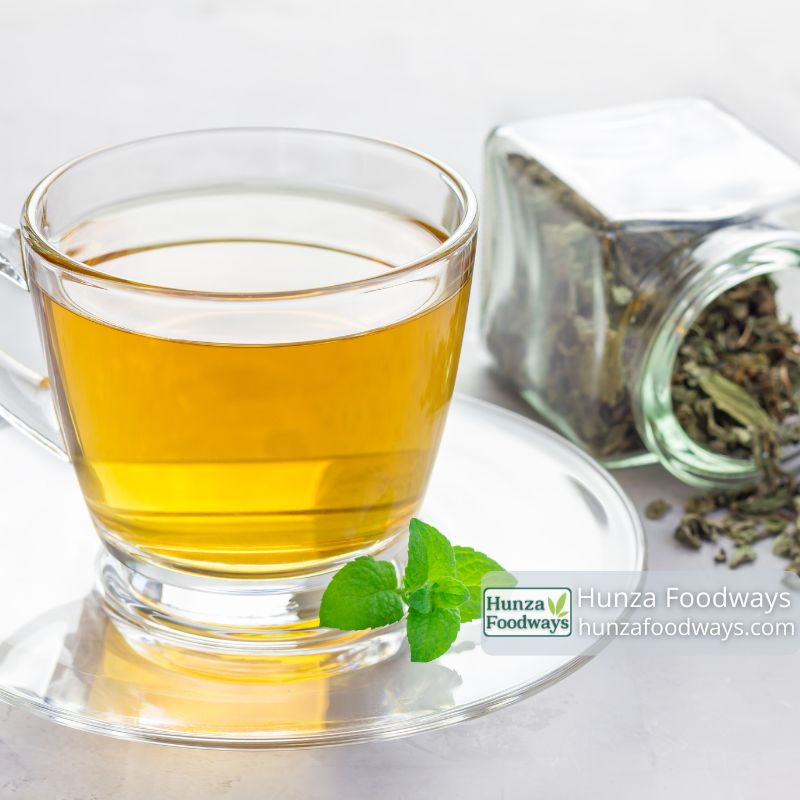
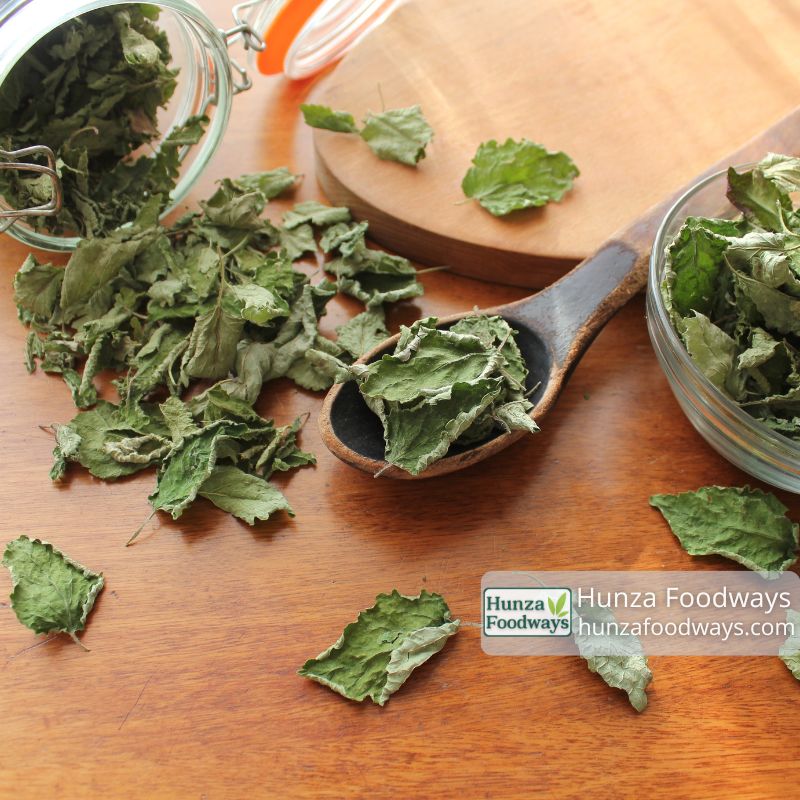
Peppermint tea is a caffeine-free herbal infusion made from the dried leaves of the peppermint plant, known in Urdu as podina. Unlike black or green tea, it contains no caffeine, which makes it a natural choice for evening sipping, for children, and for anyone managing caffeine sensitivity. The character of the brew comes largely from menthol, the active compound responsible for that familiar cool, crisp sensation. It is at once refreshing and deeply calming, which is a rare combination in any single cup.
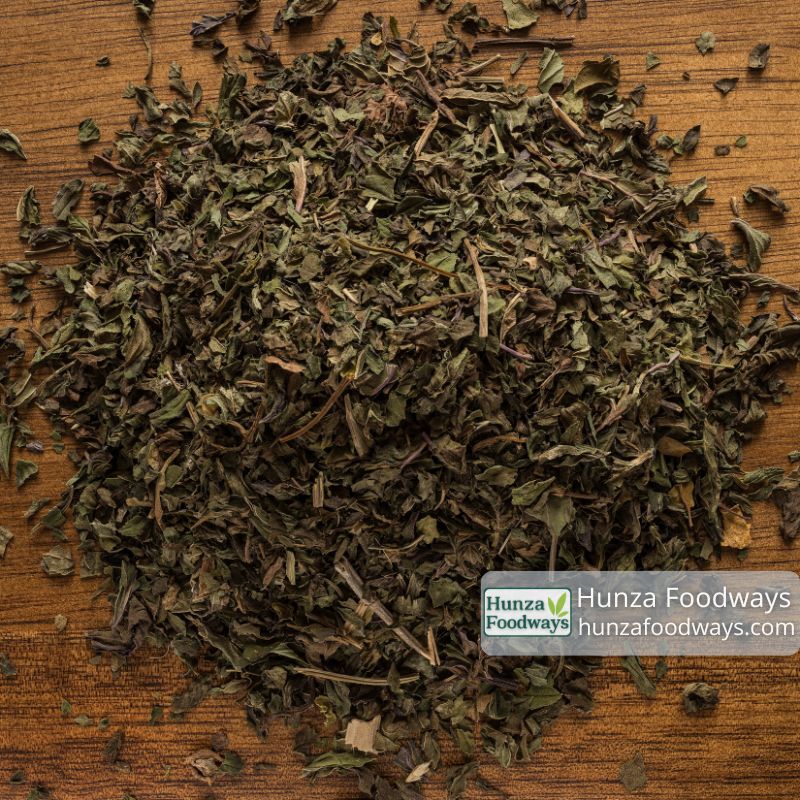
This is not flavoured tea or a mint blend. Each pouch contains only single-ingredient dried peppermint leaves, nothing else added.
Wild-Grown in the Karakoram and Himalayan Mountains of Hunza
Most commercially available peppermint tea in Pakistan comes from cultivated farms, often treated with pesticides and processed in bulk. Ours does not. This peppermint grows wild across the high-altitude mountain terrain of Hunza Valley, in the Karakoram and Himalayan ranges of Gilgit-Baltistan. It is never planted, never sprayed, and never grown in controlled conditions.
Local women hand-harvest the leaves at peak maturity, when the menthol content is highest. The leaves then go through a careful sun-drying process before being packed in small batches. There are no additives, no preservatives, no artificial colours, and no fillers. What you receive is exactly what the mountain produces.
This sourcing model matters because wild plants tend to develop more concentrated phytochemicals than their farmed counterparts, since they grow in response to actual environmental conditions rather than controlled inputs.
Benefits of Peppermint Tea
Research backs up what generations of Pakistani households already knew about podina. According to Healthline, Peppermint Tea, carries several well-studied benefits:
- Soothes digestion: Menthol acts as a natural muscle relaxant in the gastrointestinal tract, helping relieve gas, bloating, and indigestion. A cup after a heavy meal can help your system process food more comfortably.
- Relieves tension headaches: The cooling and vasodilatory effects of menthol help relax tense muscles and support blood flow, which may ease the grip of a tension headache without reaching for a tablet.
- Clears congestion: Breathing in the steam from a warm cup delivers menthol and eucalyptol directly to the airways, where they act as gentle natural decongestants and soothe a scratchy throat.
- Eases menstrual cramps: Because menthol relaxes smooth muscle, sipping peppermint tea during menstruation can help reduce uterine cramping. This makes it one of the more practical peppermint tea benefits for women during those difficult first days.
- Supports immunity: Peppermint leaves contain antioxidants alongside natural antibacterial and antiviral compounds that give your immune system a quiet but meaningful boost.
How to Make Peppermint Tea
The peppermint tea recipe could not be simpler, which is part of why it has stayed so popular across generations. Here is a basic preparation guide:
- Bring one cup of fresh water to a near boil, around 90 to 95 degrees Celsius
- Add one heaped teaspoon of dried peppermint leaves, or about 1 to 2 grams
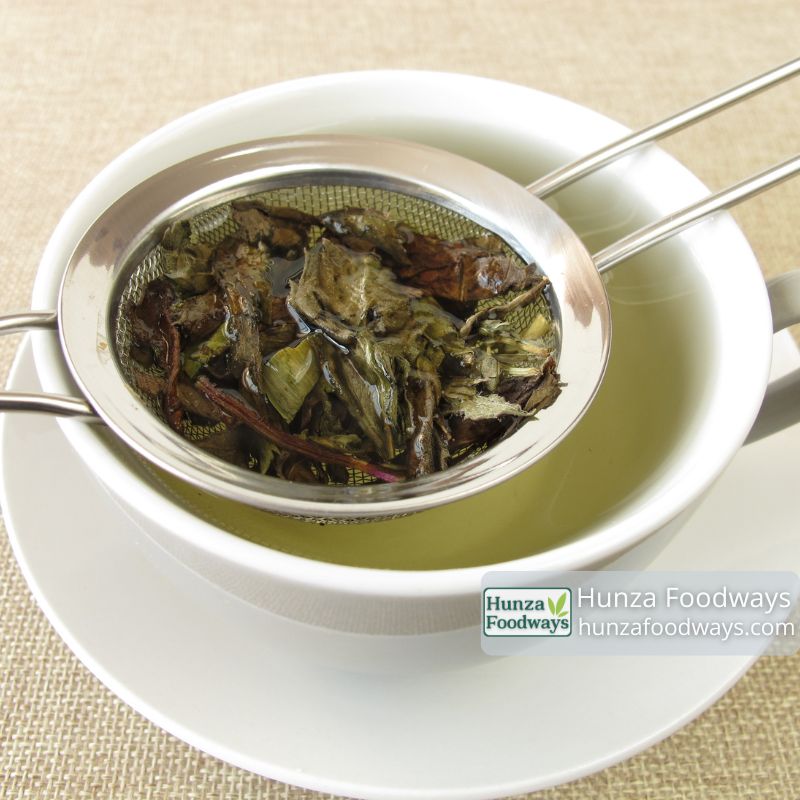
- Let it steep for 5 to 7 minutes, covered, so the volatile oils do not escape with the steam
- Strain and sip plain, or add a small drizzle of Hunza wild honey for sweetness
- For a stronger cup, extend the steep time rather than increasing the amount of leaves
In Hunza Valley, podina chai often serves as the tea of choice after dinner, especially after meals heavy in meat or bread. It is also prepared during cold season to help with chest congestion and is given to children with upset stomachs. Some households combine it with dried ginger for an even warmer, more grounding effect in winter months.
Spearmint Tea vs Peppermint Tea
This is a question that comes up often, and it is worth answering clearly. Both are mint varieties and both are caffeine-free, but they have meaningfully different characters. Peppermint has a sharper, more intensely cooling flavour because of its higher menthol content. Spearmint is softer and sweeter, with a menthol content that is much lower.
For digestion and congestion, peppermint tends to be the stronger functional choice. For everyday sipping or for women managing hormonal concerns like PCOS, spearmint is often recommended more specifically. If you are curious about the latter, our Spearmint Tea is sourced through the same wild-harvested process and makes a nice companion to keep in the cupboard alongside this one.
Why This Peppermint Tea Is Different
There is no shortage of peppermint tea available in Pakistan. What is harder to find is one sourced from a specific, traceable, wild-grown origin with no interference from processing additives. Here is what separates this product:
- Wild-grown on the slopes of Hunza Valley, not cultivated on commercial farms
- Hand-harvested by local women from the Gilgit-Baltistan mountain communities
- Sun-dried naturally without industrial dehydrators
- Processed in small batches to maintain the integrity of the leaves
- Single-ingredient, with absolutely nothing added
- Directly sourced, which means producers receive fair value for their work
Frequently Asked Questions
What is peppermint tea called in Urdu?
Peppermint tea in Urdu is commonly called podina chai. Podina refers to the mint plant, and the tea is simply a brew made from its dried leaves. It is well recognised across Pakistani households in both its fresh and dried forms.
Are there any peppermint tea side effects?
For most people, peppermint tea is very well tolerated. However, individuals with gastroesophageal reflux disease (GERD) or acid reflux may find that peppermint relaxes the lower oesophageal sphincter and worsens symptoms. It is also best to consult a healthcare provider before consuming it in large amounts during pregnancy. In normal, moderate quantities, peppermint tea is generally considered safe for healthy adults and children.
Can I drink peppermint tea every day?
Yes, for most people one to three cups a day is entirely reasonable. Many people drink it daily as a post-meal digestive or as a caffeine-free evening wind-down. Because it contains no caffeine, it does not disrupt sleep the way other teas might.
How is this peppermint tea different from supermarket brands?
Supermarket options are typically commercially grown, often sourced from farms that use pesticides, and processed at scale with additives to extend shelf life. This peppermint is wild-grown, additive-free, and hand-harvested from Hunza Valley, making its origin and quality genuinely different.
Both the 30g and 50g pouches are available. The 50g pouch offers better value if you plan to drink it regularly, while the 30g is a good starting size if you are trying it for the first time.
You May Also Like
If peppermint tea has caught your attention, these other herbal teas from our collection may interest you as well:
| Herbal Tea | Benefits | Price | Link |
|---|---|---|---|
| Wild Thyme Tea | – Boosts immunity – Supports respiratory health – Rich in antioxidants | Rs 499 – Rs 1080 | View Product |
| Dandelion Tea | – Supports liver detox – Aids digestion – Acts as a natural diuretic | Rs 499 – Rs 1980 | View Product |
| Dandelion Root | – Anti Cancer Properties – Acts as a natural diuretic | Rs 1180 – 1860 | View Product |
| Spearmint Tea | – Helps balance hormones – Aids digestion – Reduces acne and excess facial hair | Rs 990 – Rs 1980 | View Product |
| Raspberry Leaf Tea | – Supports women’s reproductive health – Eases menstrual cramps – Rich in vitamins and minerals | Rs 790 – Rs 1280 | View Product |
| Lemongrass Tea | – Supports digestion – Reduces stress and anxiety – Has antibacterial properties | Rs 570 – Rs 980 | View Product |
| Chamomile Tea | – Promotes relaxation and sleep – Reduces inflammation – Supports digestive health | Rs 880 – Rs 1399 | View Product |
| Olive Leaf Tea | – Supports heart health – Boosts immunity – Has antiviral and antimicrobial properties | Rs 480 – Rs 880 | View Product |
| Rosemary Leaf Tea | – Enhances memory and focus – Supports digestion – Rich in antioxidants | Rs 480 – Rs 980 | View Product |
| Gymnema Tea | – Reduce sugar cravings -Support healthy blood sugar levels -Reduce inflammation and support weight loss | Rs 990 | View Product |
| PCOS Tea (Blend of 7 Teas) | – Helps regulate hormones – Supports menstrual cycle – Reduces bloating and inflammation | Rs 980 – Rs 2280 | View Product |
| Sea Buckthorn Leaf & Berry Tea | – Boosts immunity & fights oxidative stress – Caffeine-free natural energy lift – Supports skin health from within | Rs 480 – Rs 680 | View Product |
| Lemon Balm Tea | – Reduces stress and anxiety naturally – Supports better sleep and relaxation – Eases bloating and indigestion | Rs 690 – Rs 990 | View Product |
All health content on HunzaFoodways.com is provided for general information only and should not be treated as a substitute for the medical advice of your doctor or any other health care professional. Unless otherwise stated, all products are grown in natural environments without using preservatives or artificial flavors, but no product is lab tested and certified organic. Read the complete medical disclaimer.


Mehwish Ahmed (verified owner) –
Good experience overall.
Alina Noor (verified owner) –
Meri second order thi. Same achi quality.
Ayesha Khan (verified owner) –
Nice product. Will order again InshaAllah.
Iqra Hassan (verified owner) –
Price bhi reasonable hai.
Sadia Bibi (verified owner) –
This tea is perfect for relaxing after a long day. Really enjoyable.
Sana Raza (verified owner) –
Received exactly what was shown on the website. Great buying experience.
Kiran Malik (verified owner) –
The tea arrived in perfect condition and brewed into a beautiful cup.