


Description
Aalo Bukhara: The Fruit Hunza Valley Has Dried for Generations
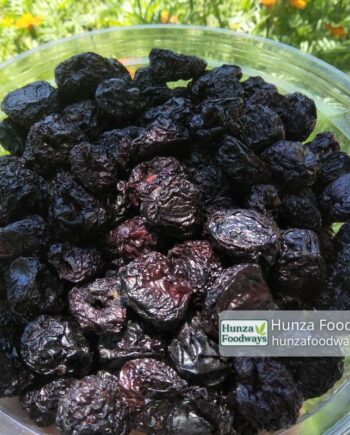
Long before prunes became a wellness trend, the orchards of Hunza Valley were already turning ripe plums into aalo bukhara, drying them slowly under the sun the way families here have done for generations. This is not a factory-processed health food. It is a fruit that grows on Prunus trees at altitude, gets picked at peak ripeness, and is laid out to dry until the sugars concentrate and the flesh turns dense and chewy.
What Is Aloo Bukhara in English
If you grew up hearing aalo bukhara at home and are wondering what it is called in English, the answer is prunes, or dried plums. Fresh plums are oval, juicy fruits with a smooth edible skin, a stone at the centre that gets discarded before eating or cooking, and a natural white dusting on the skin called bloom. Once dried, that same fruit becomes the wrinkled, deep purple prune most people recognise. So when someone asks what is prune in Urdu or what are prunes in Urdu, the straightforward answer is aalo bukhara, and when someone asks the reverse, dried aloo bukhara in English is simply prunes.
Where Ours Comes From
Our prunes are hand harvested from orchards across Gilgit-Baltistan and sun dried the traditional way, with no added sugar, no preservatives, and no shortcuts. The women farmers of Hunza who grow and process this fruit have been doing it since long before “organic” was a label anyone needed to print on a bag. What you get is the fruit exactly as it left the tree, just without the water.
Health Benefits of Prunes
Prunes carry a genuine nutritional case, not just a marketing one. According to Healthline, regular prune consumption is linked to several real benefits:
- Fiber that supports regular digestion and helps with constipation
- Potassium that supports heart rhythm, nerve function, and healthy blood pressure
- Vitamin K, copper, and B vitamins in meaningful amounts per serving
- Compounds that may help protect bone density, particularly in older adults
- Antioxidant polyphenols that help lower inflammation in the body
That said, prunes are not something to eat without limits. Because of their natural sorbitol and fiber content, eating too many in one sitting can lead to gas, bloating, or diarrhea. Most people do well with a small daily handful rather than a large bowl. If you are asking how many aloo bukhara in a day is reasonable, five to six prunes, or about 40 to 50 grams, is a sensible starting point, and you can adjust from there based on how your body responds. Anyone managing a kidney condition or on a restricted diet should check with a doctor before adding prunes regularly, since they are relatively high in potassium.
How to Eat Aalo Bukhara
Our dried plums work well eaten on their own as a snack, but they are also versatile in the kitchen. A few simple ways to use them:
- Soak a few overnight and eat them first thing in the morning
- Add chopped prunes to oatmeal, trail mix, or baked goods
- Stir a handful into a savory meat or lentil stew for natural sweetness and depth
- Blend into smoothies or purée into a simple prune jam
If you like the idea of pairing prunes with other Hunza-grown dried fruit, our mixed dry fruit and nut trail mix is worth a look, and if apricots are more your usual pick, our knife-cut dried apricots or the soft, tangy variety come from the same valley.
Prunes in Pakistan: Why Sourcing Matters
A lot of what gets sold as prunes in Pakistan is imported, blended, or treated to look glossier than it naturally would be. Real aalo bukhara from Hunza looks a little rougher, a little more matte, because nothing has been done to it besides drying. When you are buying prunes in Pakistan, checking where the fruit was actually grown tells you more than any label on the packet. Ours is single origin, grown and dried entirely within Gilgit-Baltistan, and packed in small batches so it reaches you close to when it was processed rather than sitting in a warehouse for a year.
Pack Sizes
Aalo bukhara is available in 300g and 500g packs, sized for a household that eats it regularly as a snack or uses it in cooking, without letting a large stock go stale. Given how naturally sweet and dense dried plums are, a little goes a long way, so even the smaller pack lasts longer than you would expect.
If you are curious about other wild-harvested fruit from the same orchards, our sea buckthorn berries and black mulberries come from the same women-led harvesting network and the same sun-drying tradition.
There is something worth noticing in a fruit that has fed people in these mountains for generations before anyone called it a superfood. Aalo bukhara from Hunza Valley is sitting in stock now, ready to be part of your next order, whether it is your first jar or a repeat one.


Reviews
There are no reviews yet.