
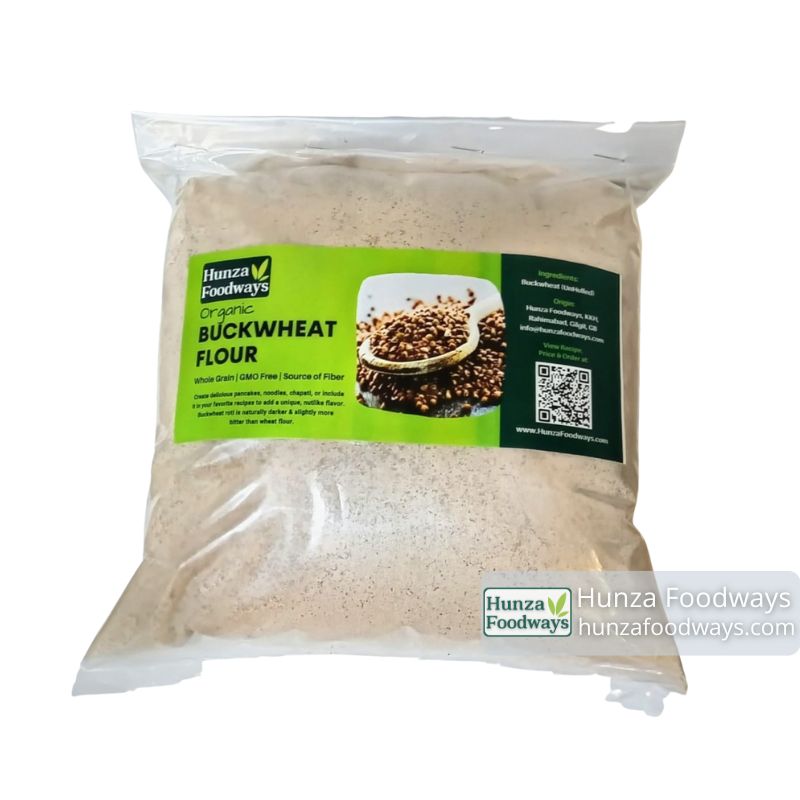
Looking for gluten free atta in Pakistan that actually works for roti, not just Western-style baking? Our gluten free flour collection is milled from grains grown in the Hunza Valley, buckwheat, locally known as baru, has been a staple grain in these mountain villages for generations, long before “gluten free” became a health trend. Paired with our pure almond flour, this small range gives celiacs, gluten-intolerant families, and anyone exploring a wheat-free diet a genuine option for everyday cooking, not just occasional treats.
List of Gluten Free Flour (Atta):
Why Gluten Free Atta Matters More Than You’d Think
Most gluten free flour sold in Pakistan is imported, expensive, and made for a Western pantry, think bread loaves, muffins, and pancake mixes. It rarely accounts for the fact that atta, in a Pakistani household, is not a specialty baking ingredient. It’s dinner. It’s the roti that comes out three times a day, the paratha on a Sunday morning, the base of a meal that doesn’t change even when a diagnosis does.
When someone in a family is told they have celiac disease or a gluten sensitivity, the hardest adjustment usually isn’t giving up bread, it’s giving up roti. That’s the gap we built this range to close. Our buckwheat atta isn’t a repackaged baking flour with “gluten free” printed on the label for search purposes. It comes from a grain that mountain communities in Gilgit-Baltistan have been growing and grinding into roti for longer than gluten free eating has been a category at all.
The Hunza Story Behind Our Gluten Free Flour
Hunza Foodways is a Community Supported Agriculture business rooted in Rahimabad Valley, Gilgit-Baltistan. Every product we sell, including this flour, is hand-prepared in small batches by the women of Hunza, using methods passed down through their families rather than industrial processing lines.
Buckwheat has grown at altitude in this region for centuries, thriving in terraced fields where wheat struggles. Long before it had a place in gluten free diets abroad, trumba was ground into flour and eaten as a daily grain by Hunza households, often alongside apricots, walnuts, and the other crops the valley is known for. When you buy our buckwheat atta, you’re not just buying a gluten free alternative — you’re supporting the same women farmers and millers who’ve kept this grain in cultivation, and directly funding the agricultural work happening in Rahimabad Valley. You can read more about that mission here.
We mill in small batches specifically so nothing sits in storage long enough to lose freshness or absorb the artificial preservatives that larger commercial gluten free brands rely on to extend shelf life. What you get is closer to what a Hunza household would grind for its own kitchen than to a factory-produced substitute.
This also means our supply of buckwheat atta is genuinely tied to a harvest, not a factory schedule. The grain is grown on family-run plots across the valley, cleaned and sorted by hand, and milled in small runs close to the time it ships. It’s a slower way of producing flour than a commercial mill would use, and it’s also the reason the flavor and nutrition hold up the way they do, nothing here has been sitting in a warehouse for months before it reaches your kitchen. For a business built around a Community Supported Agriculture model, that slower pace isn’t a limitation, it’s the point: income stays close to the people who grew the crop, and the product itself stays closer to what it was in the field.
Buckwheat Flour (Trumba Atta): What It Is and How to Use It
Buckwheat is technically not a wheat relative at all, despite the name, it’s a seed, related more closely to rhubarb than to actual wheat. That’s what makes it naturally, entirely free of gluten, without any processing required to strip it out.
Nutrition and taste. Buckwheat flour has an earthy, slightly nutty flavor and a denser texture than wheat atta. It’s naturally high in fiber and plant protein, and contains minerals like magnesium and manganese that are harder to find in refined gluten free flours. Unlike a lot of gluten free substitutes, which lean on starches like tapioca or rice flour for bulk, buckwheat carries real nutritional weight of its own.
Making roti with buckwheat atta. Because buckwheat lacks gluten, it won’t stretch and hold air the way wheat dough does, so the technique for roti needs a small adjustment. A few things help:
- Use warm (not boiling) water when kneading, and let the dough rest for 15–20 minutes before rolling, this makes it far less likely to crack.
- Roll the dough slightly thicker than you would wheat roti, and handle it gently when transferring it to the tawa.
- Many households mix buckwheat atta with a small proportion of another gluten free flour, or an egg if diet allows, purely to help the dough hold together, this is optional, and a lot of people successfully make pure buckwheat roti without it, especially once they’ve gotten a feel for the dough.
- Eat it fresh. Like most gluten free roti, buckwheat roti firms up more than wheat roti does once it cools, so it’s best served straight off the tawa.
Beyond roti. Buckwheat flour also works well in pancakes, where its nutty flavor is a genuine improvement rather than a compromise, and in denser breads and cookies where its structure holds up better than lighter gluten free flours.
If you’d like to start with the whole grain rather than the milled flour, for porridge, sprouting, or milling fresh at home, we also carry whole buckwheat seed sourced from the same Hunza fields.
Almond Flour: A Lighter, Naturally Sweet Option
Where buckwheat is dense and earthy, almond flour is light, slightly sweet, and finely milled — closer in texture to a baking flour than a roti flour. It’s made by grinding blanched almonds into a fine powder, and it carries the natural richness of the nut into whatever it’s used in.
Almond flour is a strong option for:
- Cookies and biscuits, where it produces a soft, slightly chewy texture
- Cakes and muffins, where it adds moisture without needing extra oil
- Thickening sauces or coating proteins, as a wheat-free alternative to breadcrumbs
It’s not typically used for roti on its own, since it doesn’t bind the way a starchier flour does, but it pairs well with buckwheat atta in a blend for those who want a slightly lighter roti texture with some of buckwheat’s structure.
Our almond flour is cold-milled from whole almonds with nothing added, so it retains the natural oils and flavor of the nut rather than the dry, chalky texture you sometimes find in commercially processed versions. If you’re curious about the wider role nut-based ingredients play in Hunza cooking and skincare, our blog covers the traditional oils made from the same trees.
Buckwheat vs. Almond Flour vs. Other Gluten Free Flours
Not all gluten free flour behaves the same way, and a lot of frustration with gluten free cooking comes from treating every flour like a direct wheat substitute. Here’s how our two flours compare, and where each one fits.
Buckwheat atta is the closer match to traditional wheat atta in terms of role, it’s dense, earthy, and built for everyday cooking like roti and paratha. It has the most fiber and mineral content of the two, and the least “sweet” flavor profile, which makes it more versatile for savory dishes.
Almond flour is finer, lighter, and naturally sweet, closer in behavior to a specialty baking flour than a daily atta. It shines in cookies, cakes, and coatings, but isn’t the flour to reach for if roti is the goal.
Compared to other gluten free flours available in Pakistan, rice flour, cornflour, or imported all-purpose gluten free blends, both of ours offer something those typically don’t: real nutritional density. Rice flour and cornflour are mostly starch, which is why a lot of gluten free baking ends up tasting empty or overly light. Buckwheat and almond flour both carry protein, fiber, and micronutrients from the whole grain or nut, so they contribute to a dish rather than just filling volume.
If you’re new to gluten free cooking, a practical approach many of our customers use is starting with buckwheat atta for daily roti, and keeping almond flour on hand specifically for baking days.
Common Mistakes When Switching to Gluten Free Atta
Most of the disappointment people report with gluten free flour comes down to a handful of avoidable mistakes, not the flour itself:
- Using cold water instead of warm. Warm water helps buckwheat dough hold together far better than cold water does, since it slightly activates the starches in the flour.
- Rolling the dough too thin. Wheat dough can be rolled paper-thin because gluten holds it together. Gluten free dough needs a bit more thickness to survive rolling and cooking without tearing.
- Skipping the rest period. Even ten to fifteen minutes of resting after kneading makes a noticeable difference in how easily the dough rolls out.
- Storing roti for later. Gluten free roti, including buckwheat roti, is best eaten fresh. It firms up faster than wheat roti once it cools, so cooking it close to mealtime gives the best texture.
- Buying flour that’s been sitting too long. Gluten free flours without preservatives have a shorter effective shelf life than stabilized commercial flour. Freshness at the point of purchase matters more here than with regular atta, which is part of why we mill in small batches rather than holding large stock.
Who Gluten Free Atta Is For
This flour range is built for a few different kitchens, and it’s worth being specific about who benefits most:
- Celiac disease. Buckwheat and almond flour are both inherently free from wheat, barley, and rye, making them safe staples for a strict celiac diet, provided they haven’t been processed on shared equipment with gluten-containing grains.
- Gluten intolerance or sensitivity. For anyone who reacts to gluten without a celiac diagnosis, switching daily roti to buckwheat atta is often the single biggest dietary change that helps.
- Wheat-free households by choice. Some families choose to reduce wheat for reasons unrelated to diagnosed sensitivity, and want a flour that still feels like a real staple rather than a specialty product used occasionally.
- Bakers looking for flavor, not just function. Buckwheat and almond flour both bring genuine taste to baked goods, this isn’t only a medical-need product.
If you’re newer to a gluten free diet and want to understand where atta fits into a broader eating pattern, our team is happy to answer questions directly , reach out through our contact page or live chat, since we only handle support through chat for better record keeping.
Storing Your Gluten Free Atta
Because our flours are milled fresh in small batches without preservatives, storage matters more than it would with a commercially stabilized flour. Keep the pack sealed and stored in a cool, dry place, away from direct sunlight. Once opened, we recommend transferring it to an airtight container and using it within a few weeks for the best flavor, or storing it in the refrigerator if you’re in a particularly hot or humid part of Pakistan. Buckwheat flour in particular can pick up moisture quickly, which affects both shelf life and how the dough behaves.
Frequently Asked Questions
Which atta is gluten free?
Atta made from grains other than wheat, barley, or rye is gluten free. Our range includes buckwheat atta and almond flour, both naturally free of gluten and safe for celiac and gluten-sensitive diets.
What is gluten free atta made of?
Gluten free atta is flour milled from non-wheat grains, seeds, or nuts, like buckwheat, almonds, or millet, instead of traditional wheat. It’s used the same way as regular atta, though texture and binding differ slightly, especially in roti.
Can I make roti with gluten free atta?
Yes. Buckwheat atta makes a dense, hearty roti with a slightly nutty taste. Since it lacks gluten’s elasticity, it helps to use warm water, rest the dough before rolling, and eat the roti fresh rather than storing it.
Is buckwheat atta the same as wheat atta?
No, despite the similar name, buckwheat is not related to wheat at all, it’s a seed, not a grain in the wheat family, which is exactly what makes it naturally gluten free.
Is gluten free atta more expensive than regular atta?
Generally yes, since gluten free grains like buckwheat are grown in smaller quantities and require more careful, often manual, processing. Our pricing reflects small-batch milling directly from Hunza farms rather than large-scale industrial production.
Does gluten free atta taste different from wheat atta?
Yes, buckwheat atta has an earthy, nutty flavor, and almond flour has a light, slightly sweet taste. Neither is meant to taste identical to wheat; they bring their own character to the dish.
Where can I buy gluten free atta in Pakistan?
Hunza Foodways ships gluten free buckwheat and almond flour across Pakistan directly from Rahimabad Valley, Gilgit-Baltistan, hand-milled in small batches by local women producers.
Why Buy Gluten Free Atta From Hunza Foodways
There’s no shortage of gluten free flour brands in Pakistan now, most of them importing or industrially processing their product. What’s different here is where this flour actually comes from. Every pack of buckwheat atta we sell is milled from grain grown in Hunza’s terraced fields and processed by hand in Rahimabad Valley by the same women who have grown and prepared these crops for their own families for generations.
Buying from this range does three things at once: it gives you a flour that’s genuinely suited to how Pakistani households cook, not just how Western recipes are written; it supports a Community Supported Agriculture model that keeps income inside the farming communities of Gilgit-Baltistan rather than a distant supply chain; and it keeps a traditional grain like trumba in active cultivation instead of letting it fade out in favor of more commercially convenient crops.
Read our full story to see how this business grew out of Hunza Valley, or explore our other grains and cereals if you’re building out a wheat-free pantry beyond flour.